



Specialized Freight
Logistics coordination for oversized or crane-loaded cargo, with equipment options reviewed through carrier partners.
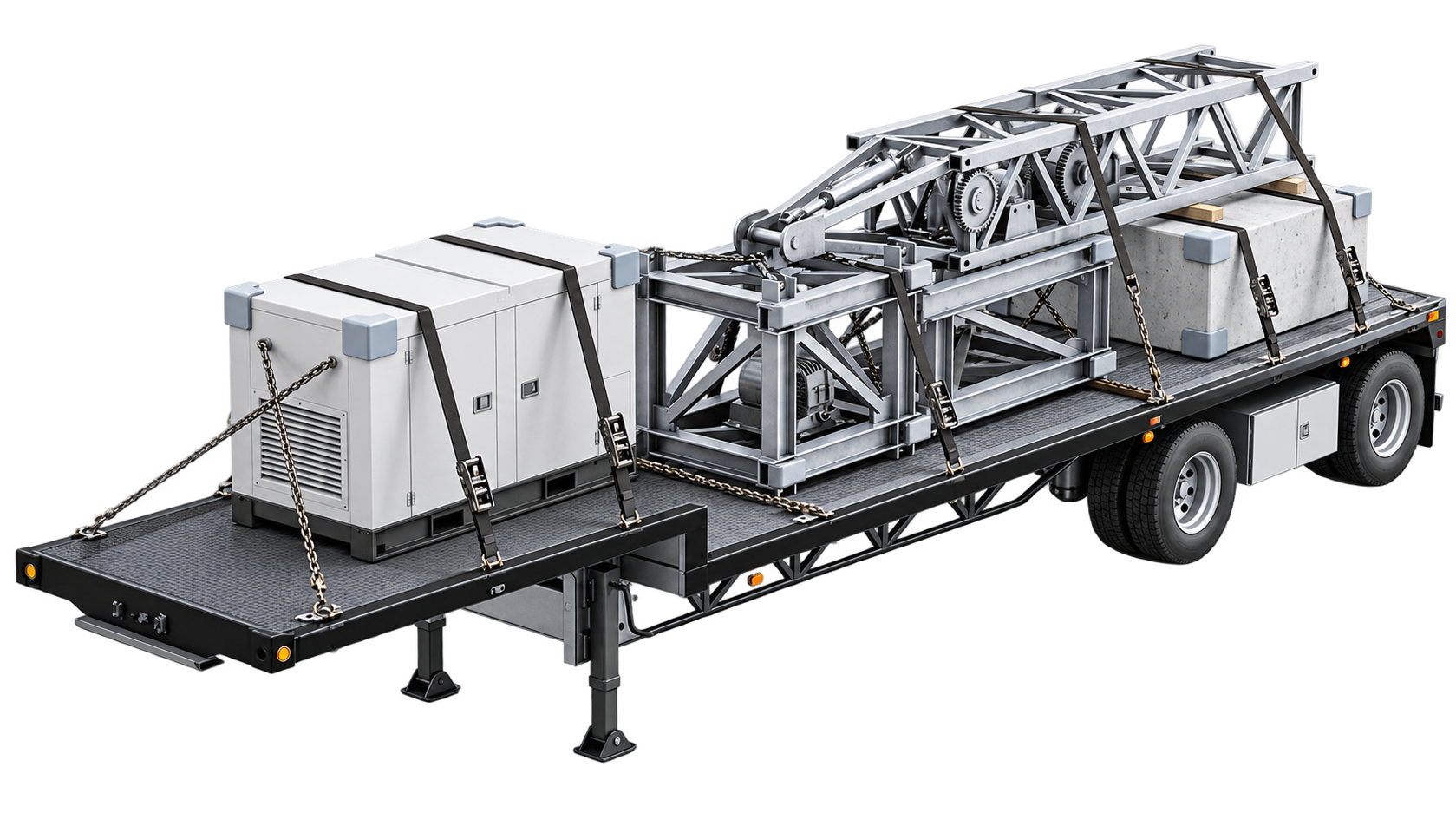
When to choose
Specialized Freight.
Specialized open-deck transport is required when cargo cannot be loaded through standard rear dry van doors, exceeds standard dimensions, or requires overhead crane loading.
- Overhead crane-loaded industrial machinery & pumps
- Structural steel beams, pipe, and raw metal coils
- Construction equipment, tractors, and site modules
- Oversized cargo requiring state travel permits
Open-deck configurations include Flatbeds, Step-Decks, and Removable Gooseneck (RGN) lowboys.
Essential for heavy industrial, structural, or jobsite deliveries where standard dock backing is impossible.
Quote specialized loadEquipment, in perspective.
Flatbed, step-deck, and lowboy configurations may suit different cargo profiles. Our team reviews equipment options and site requirements with independent providers.
53 ft Step-Deck Platform
38 in lowered well deck elevation- Deck payload limit
- Up to 48,000 lbs
- Lower deck well height
- 38 in Ground Clearance
- Weather tarping
- Lumber & Steel Tarps
Loaded height, route restrictions, and permit needs must be confirmed for the actual equipment.
Tarp type, dimensions, and handling are confirmed with the carrier.
Before loading
Rigging & tie-downsIdentify designated crane hook points, center-of-gravity markings, and chain binder paths.
Jobsite clearanceConfirm the access route, ground conditions, turning space, and unloading area with the site contact and carrier.
Open-deck equipment types (Flatbed, Step-Deck, RGN) and securement accessories are selected per shipment profile.
Request flatbed quotePlan your specialized move.
Accurate dimensions and handling details help our team coordinate equipment, route-review, permit, and site-planning requirements with the responsible providers.
Dimensions, center of gravity & weight
Exact length, width, height, gross weight, and center-of-gravity placement. Determines whether the cargo can travel legally or requires low-profile step-deck equipment and oversize permits.
Loading method & crane rigging
Overhead crane pick points, drive-on ramp needs, or forklift side-loading access. Ensures the trailer configuration matches your facility's loading equipment and rigging capabilities.
Securement & weather tarping
Grade-70 transport chains, corner dunnage, soft straps, and lumber or steel tarp requirements. Protects structural components against transit road spray while securing heavy cargo to DOT safety standards.
Permits, escorts & jobsite survey
State DOT oversize permits, route surveys, pilot escort cars, and jobsite turning apron access. Coordinates legal travel hours, bridge clearance routing, and jobsite unloading safety before dispatch.
Moving oversized or unusual machinery?
Our logistics team will review the requirements with potential providers.
Questions, answered.
Need to talk through oversized equipment? (314) 941-2139
What is the difference between a flatbed and a step-deck trailer?
A step-deck has a lower main deck than a conventional flatbed and may suit taller cargo. Usable dimensions and any permit requirements depend on the actual trailer, loaded height, weight, and route.
When are oversize permits and pilot cars required?
Permit and escort requirements depend on the loaded dimensions, total weight, equipment, and route. The responsible carrier or qualified provider must confirm the requirements for the specific move.
How is open-deck cargo protected from weather and road debris?
Specify the weather protection required for the cargo. Tarp type, size, and application are confirmed with the selected carrier before pickup.
Can heavy self-propelled equipment be driven directly onto the trailer?
Yes. Removable Gooseneck (RGN) trailers detach from the tractor, allowing the front of the trailer to drop flat onto the ground to create a gentle drive-on ramp for excavators, bulldozers, and heavy wheeled industrial units.
How far in advance should specialized or oversize freight be booked?
Share the details as early as possible. Lead time depends on carrier availability, equipment, permits, escorts, route review, and site arrangements; the schedule is confirmed for the specific shipment.
Have a shipment
in mind?
Share your freight, locations, and timing to start the conversation.