



Drayage & Intermodal
Container logistics coordination between terminals and inland facilities through independent carriers.
When to choose
Drayage & Intermodal.
Drayage is the vital link connecting international ocean freight and Class-1 rail networks with domestic distribution centers and manufacturing plants.
- Import/export ocean containers (20', 40', 45' ISO boxes)
- Class-1 rail ramp transfers and cross-town dray moves
- Demurrage-sensitive pickups before Last Free Day (LFD)
- Street-turn container optimization for export shippers
Facility access, interchange arrangements, and driver credentials must be confirmed for the selected carrier and terminal.
Crucial for international trade imports and domestic rail container handoffs requiring strict demurrage management.
Request drayage quoteEquipment, in perspective.
Chassis options depend on the container, cargo weight, terminal rules, and carrier availability. Our team coordinates these requirements with the relevant providers.
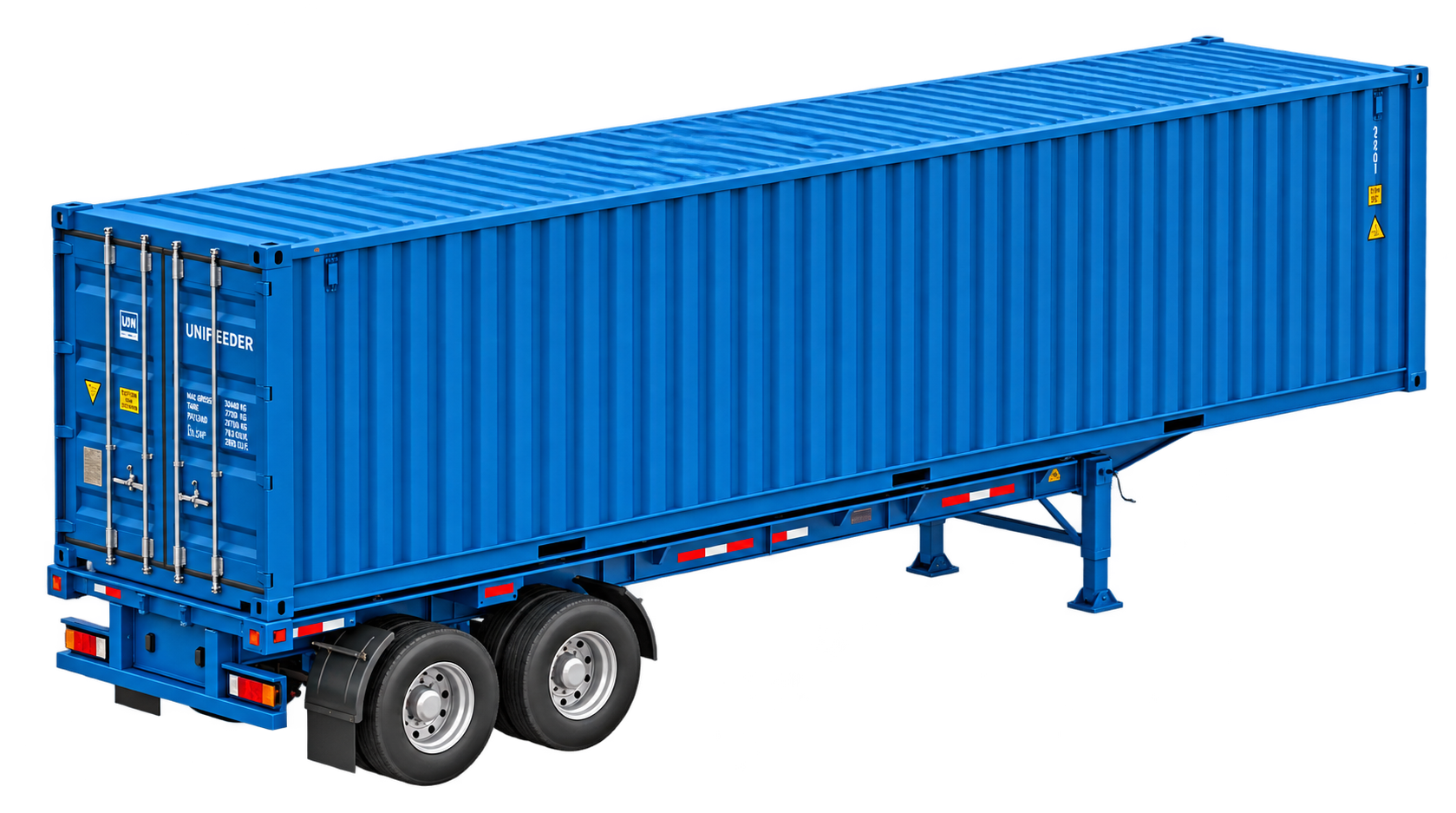
40 ft Skeletal Container Chassis
ISO container & twistlock elevation- Container dimensions
- 20', 40', 45' ISO
- Chassis options
- Tandem & Tri-Axle
- Terminal access requirements
- TWIC & UIIA
Chassis configuration and allowable payload depend on the actual equipment, loaded weight, and route.
Required access credentials and interchange arrangements are checked for the specific facility and carrier.
Before loading
Discharge & holds verifiedConfirm custom releases (1Z) and steamship line freight holds before scheduling terminal gate appointments.
Empty return specifiedVerify the current empty-return instructions and applicable free-time terms with the equipment provider.
Drayage equipment interchange and port chassis requirements are confirmed prior to scheduling terminal gate appointments.
Request drayage ratePlan your drayage move.
Container numbers, release status, and free-time dates help the team coordinate with the carrier and terminal. Storage and equipment charges depend on the applicable provider terms.
Carrier, container & seal numbers
Steamship line or Class-1 rail carrier, container number (e.g. MSKU, MAEU), and bolt seal verification. Authenticates custody transfer at the marine terminal gate or rail intermodal ramp.
Vessel discharge & Last Free Day (LFD)
Vessel ETA, customs clearance status (1Z release), and exact terminal Last Free Day (LFD). Prioritizes pickup appointments before expensive terminal demurrage and per-diem detention fees begin.
Chassis configuration & scale weight
Standard 40' tandem chassis vs. 20' tri-axle chassis for heavy-weight density containers. Ensures the truck axle weights remain federally legal across highway corridors without bridge law violations.
Empty return depot & street turns
Designated ocean carrier empty return depot location, equipment interchange receipts (EIR), or export street-turns. Completes the equipment loop cleanly, closing out equipment per-diem clocks promptly.
Need port or rail ramp container drayage?
Our logistics team can review terminal and carrier requirements.
Questions, answered.
Need to talk through port or rail logistics? (314) 941-2139
What is intermodal drayage?
Drayage is the specialized transportation of ocean shipping containers and domestic rail boxes over highway corridors between marine seaports, Class-1 railheads, container depots, and inland distribution warehouses.
What are TWIC credentials and why are they necessary?
Terminal access rules vary by facility. Any required driver credentials, interchange arrangements, or escort procedures must be checked with the terminal and selected carrier before scheduling.
What is the difference between Demurrage and Detention (Per Diem)?
Demurrage is assessed by the port or rail terminal for every day a container remains on the terminal apron beyond the Last Free Day (LFD). Detention (or Per Diem) is billed by the ocean steamship line for keeping the container and chassis beyond the contract free-time window outside the terminal. Advance coordination can help manage these risks; free-time rules and charges must be confirmed with the applicable provider.
Can Arch coordinate a heavy-container move?
Share the container size, verified cargo weight, route, and terminal details. We review chassis and carrier options; the carrier must confirm load distribution, equipment suitability, and any applicable permits.
What is a container 'street-turn'?
A street-turn (or container match) occurs when an empty inbound container, after being unloaded at an import facility, is sent directly to an export shipper for reloading without first returning empty to the port. This eliminates unnecessary gate queues, reduces emissions, and slashes drayage costs.
Have a shipment
in mind?
Share your freight, locations, and timing to start the conversation.