



Refrigerated Freight
Temperature-controlled logistics planning around your commodity, handling instructions, and required range.
When to choose
Refrigerated Freight.
Temperature-sensitive products need commodity-specific review. Share the range, handling procedures, and any specialist requirements before equipment is considered.
- Fresh meat, poultry, seafood & dairy products
- Frozen food products maintaining sub-zero integrity
- Temperature-sensitive pharmaceuticals & biologics
- Seasonal freeze protection (protect from freeze) in winter
Pre-cooling, operating mode, and temperature-recording requirements are confirmed with the carrier.
Essential when cargo spoilage, FDA compliance, or pharmaceutical efficacy depends on exact degree compliance.
Request reefer quoteEquipment, in perspective.
Refrigerated equipment options are reviewed with carrier partners against the commodity, required temperature range, loading procedure, and monitoring needs.
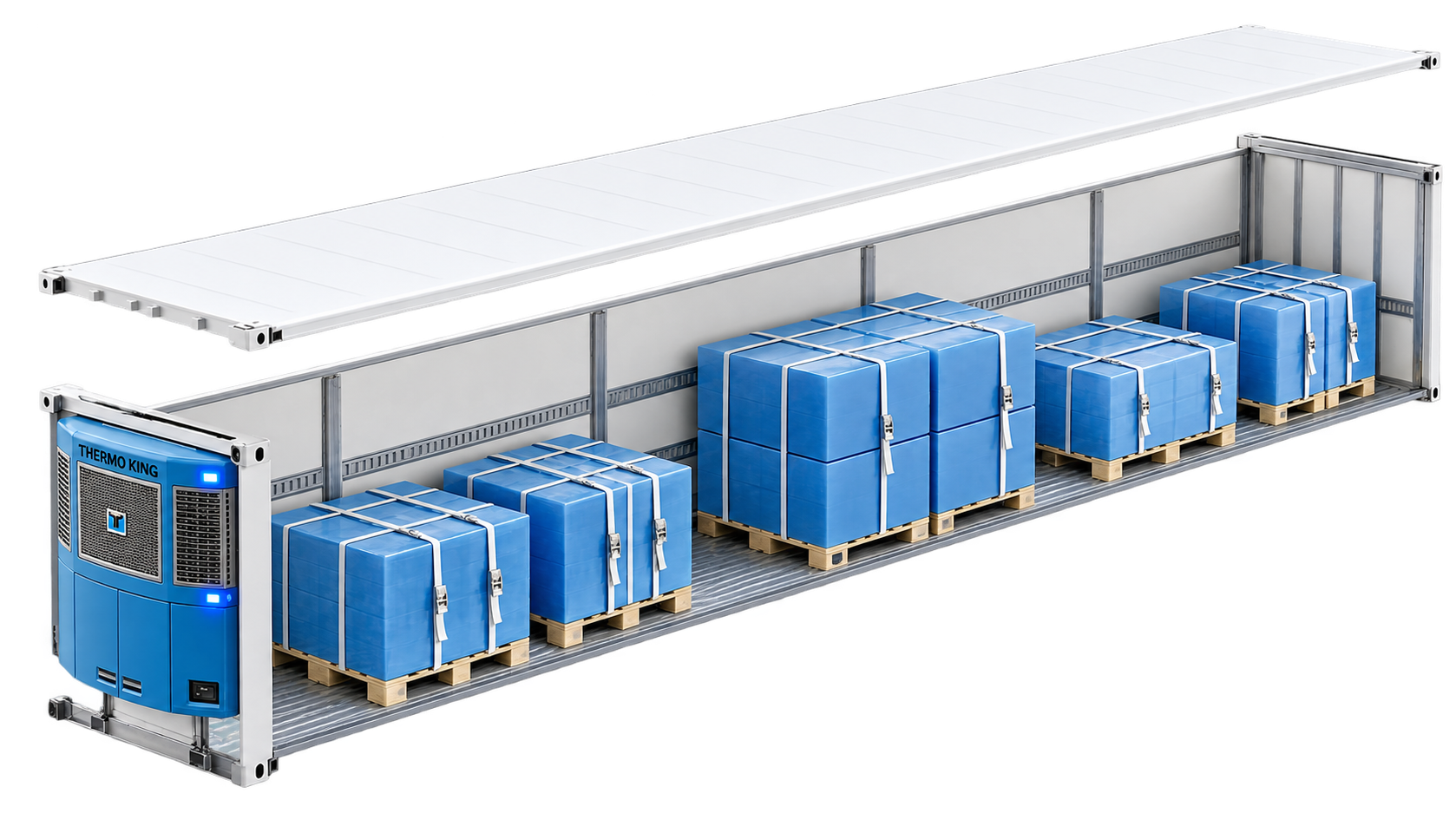
53 ft Air-Ride Refrigerated Van
Illustrative refrigerated equipment- Thermal spectrum
- -20°F to +70°F
- Airflow management
- T-Rail Aluminum Floor
- Monitoring & telemetry
- Microprocessor logs
Elevated floor channels circulate cold air under pallets back to the front evaporator.
Recording intervals, report availability, and delivery method must be agreed with the carrier.
Before loading
Pre-cooling verifiedConfirm the required set point and pre-cooling procedure with the shipper and carrier before loading.
Pulp temperatures recordedCheck internal core temperature of cargo pallets at dock before signing Bill of Lading.
Refrigerated equipment specifications and pre-cooling instructions are confirmed on each rate confirmation.
Request temperature quotePlan your cold chain shipment.
Provide the required temperature range and loading checks before pickup so the team can review them with the carrier.
Thermal set point & tolerance
Required temperature, units, acceptable variance, and commodity-specific handling instructions. Helps the carrier assess equipment suitability and any requested monitoring.
Pre-cooling & wash-out sanitation
Required pre-chill duration, dock pulping procedure, and certified clean trailer wash-out ticket. Defines the preparation and sanitation requirements to agree with the shipper and carrier.
Airflow circulation & loading layout
Air-duct clearance (minimum 12 inches below ceiling), T-rail floor clearance, and rear door curtains. Helps the shipper and carrier review airflow and loading requirements for the commodity.
Datalogger downloads & documentation
Electronic datalogger temperature export, BOL temperature sign-off, and receiver pulp inspection. Identifies the records and handoff checks to request from the carrier.
Need advice on cold chain packaging or set points?
Discuss the requirements with our logistics team.
Questions, answered.
Need to talk through temperature specifications? (314) 941-2139
How are temperature requirements coordinated?
Share the commodity, target temperature, acceptable range, and handling instructions. We review temperature-controlled carrier options for the shipment; equipment, monitoring, and any commodity-specific requirements must be confirmed.
What is the difference between 'Continuous Run' and 'Cycle Sentry'?
Continuous-run and start/stop modes manage refrigeration differently. The shipper should specify the mode required for the commodity, and the selected carrier must confirm suitable equipment and operating instructions.
What is a cargo pulp temperature test?
A pulp test uses a calibrated probe thermometer inserted into sample cartons at the loading dock to verify that goods are at proper core temperature before loading. Drivers record pulp readings directly onto the Bill of Lading.
Can Arch Logistics provide temperature datalogger reports?
Temperature records can be requested during planning. The selected carrier must confirm whether the equipment records the required data, the reporting interval, and how records will be supplied.
How are pre-cooling requirements agreed?
Provide the required pre-cooling, loading, and temperature-check procedures. These instructions should be agreed with the shipper and selected carrier before pickup.
Can you accommodate multi-temperature cargo?
Describe each temperature zone, product, and quantity. Multi-temperature equipment options need individual review and confirmation with a suitable carrier.
Have a shipment
in mind?
Share your freight, locations, and timing to start the conversation.