



Full Truckload
Dedicated trailer space. Pickup and delivery planned together.
When to choose
Full Truckload.
FTL is worth considering when shipment volume, handling needs, or dock appointments favor dedicated trailer space.
- Larger replenishment shipments
- Packaged manufacturing goods
- Loads with specific handling needs
A trailer doesn’t have to be full for FTL to be the right fit.
A useful starting point when dedicated space, fewer transfers, or coordinated appointments matter to the load.
Discuss your loadEquipment, in perspective.
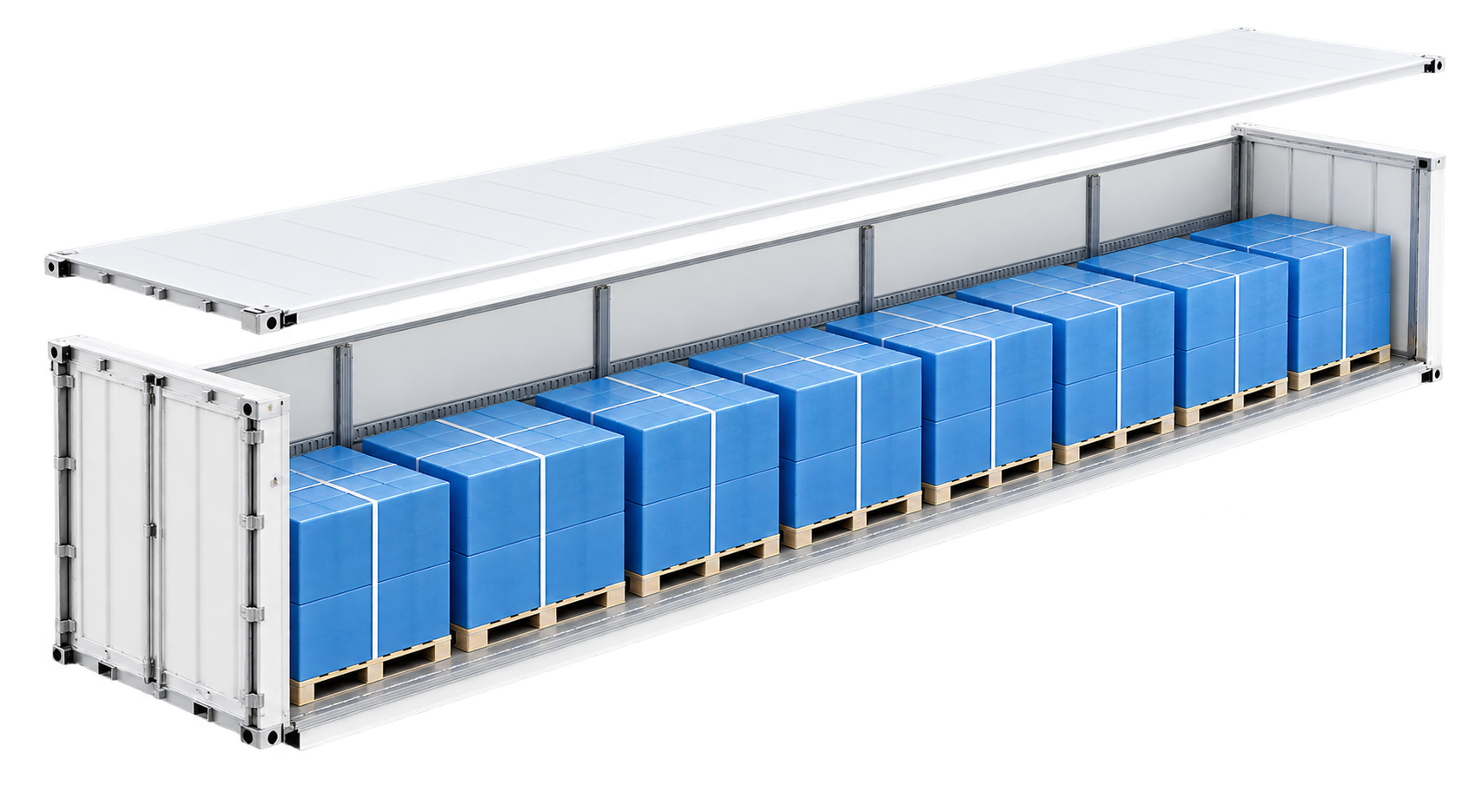
A dry van is a common starting point for packaged freight that needs an enclosed trailer. The actual equipment depends on your cargo, loading method, and facility access.
The enclosed dry van
Side & rear elevations- Common trailer lengths
- 48 or 53 ft
- Payload & usable space
- Load-specific
- Interior & door clearance
- Verify by trailer
Confirm total weight, cargo dimensions, and weight distribution.
Use packed dimensions, including pallets and packaging.
Before loading
Cargo fitCheck footprint, stackability, and securement needs.
Facility fitConfirm dock access, loading equipment, and appointment rules.
Dimensions and capacity vary by trailer configuration. Final equipment requirements are reviewed for each shipment.
Dry van length referenceTrailer capacity, in figures.
Evaluate linear trailer feet, floor space, and equipment fit inside a standard 53-foot enclosed dry van based on pallet dimensions, rotation, and stackability assumptions.
Trailer Footprint Estimate
53ft Dry Van Model- Trailer footprint
- 43.3 linear ft
- Floor utilization
- 82 %
26 floor spots needed
of 53 ft trailer floor
- Standard 53ft dry van interior dimensions: 636" L × 98" usable W × 110" interior H.
- Calculations assume standard rigid pallet bases (e.g. 48" × 40" GMA) with zero overhang or bulging.
- Over-the-road federal highway gross vehicle limit is 80,000 lbs, allowing approximately 43,000–45,000 lbs net cargo weight.
- Axle weight distribution (steer, drive, tandem) may require spreading freight across trailer floor rather than compact block loading.
- This is an operational estimate only and does not guarantee vehicle fit, legal axle compliance, or pricing.
Plan your shipment.
A clear shipment brief connects what you need to move with the equipment, timing, and site details that need to be coordinated.
Freight profile
Commodity, packaging, pallet count, dimensions, and total weight. These details help determine equipment fit, usable space, and loading needs.
Pickup and delivery locations
Pickup and delivery addresses, dock access, and facility contacts. Exact locations and site access help coordinate loading and a clear handoff at each end.
Dates and appointments
Ready date, preferred pickup window, and requested delivery timing. This brings pickup, delivery, and appointment requirements into one schedule.
Handling requirements
Stackability, securement needs, reference numbers, and special instructions. These instructions clarify cargo handling and the documents needed for the move.
Some details still unknown?
Start with what you have.
Questions, answered.
Need to talk through a particular load? (314) 941-2139
Does my shipment need to fill the entire trailer?
No. FTL refers to trailer space dedicated to your shipment. It can be worth considering even when the load does not fill the trailer, particularly when handling requirements or pickup and delivery arrangements make shared space less suitable.
What kinds of freight can move by dry van?
Dry vans are commonly used for packaged, palletized, or crated goods that can be loaded into an enclosed trailer and do not need temperature control. Dimensions, weight, packaging, loading access, and any commodity restrictions should be reviewed for the specific shipment.
How much weight or how many pallets can I ship?
There is no single capacity that applies to every shipment. Usable space and payload depend on the trailer, tractor, cargo dimensions, axle loading, and weight distribution. Provide the packed dimensions, pallet count, stackability, and total weight so these requirements can be reviewed.
Can I request a quote before every detail is final?
Yes. Start with what you know about the freight, origin, destination, and timing. Identify any details that are still estimates. Equipment, timing, and pricing depend on the complete requirements and available transportation options.
Have a shipment
in mind?
Share your freight, locations, and timing to start the conversation.